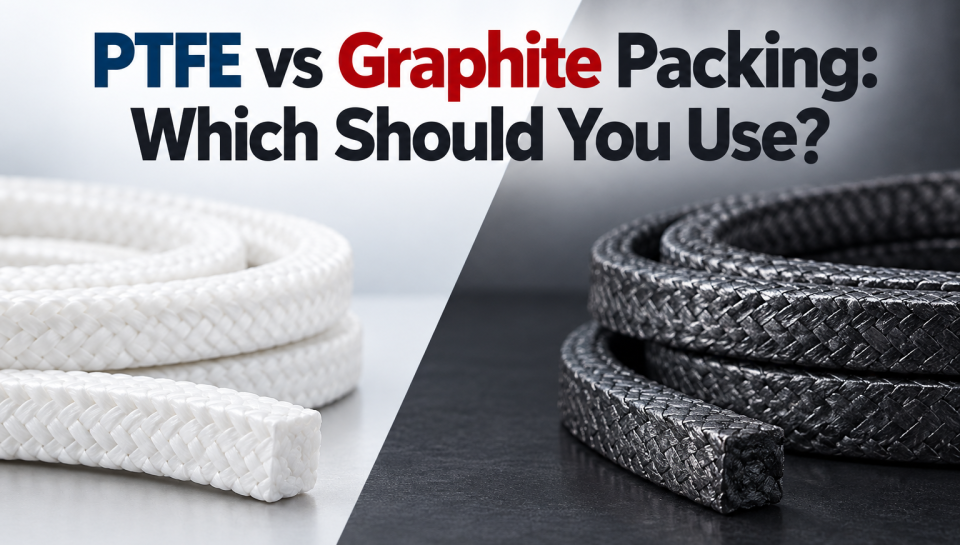
PTFE vs Graphite Packing: Which Should You Use?
Quick Answer
Use PTFE packing for chemicals and clean systems. Use graphite packing for high heat, steam, and hot oil. PTFE handles up to about 260°C. Flexible graphite handles about 450°C in air and more in steam.
Introduction
Use PTFE packing for chemicals and clean systems. Use graphite packing for high heat, steam, and hot oil. PTFE handles up to about 260°C. Flexible graphite handles about 450°C in air and more in steam.
Gland packing seals the shaft of a pump or the stem of a valve. The wrong packing material causes leaks, shaft damage, and early replacement.
What Is Gland Packing?
Gland packing is a soft, braided material that seals a shaft or valve stem. It sits in the stuffing box, which is the housing around the shaft or stem.
The gland follower squeezes the packing. This makes it fill the gap and stop leaks. On pumps, a small, controlled drip often helps cool and lubricate the packing.
When Should You Use PTFE Packing?
Use PTFE packing for strong chemicals and clean processes. PTFE, often called Teflon, is a plastic with very low friction.
What Are the Strengths of PTFE Packing?
Chemicals: it resists almost the full pH range, from 0 to 14.
Clean processes: approved grades suit food, drink, and pharma use.
Low friction: it causes less shaft wear and uses less power.
What Are the Limits of PTFE Packing?
Temperature is usually limited to about 260°C.
It moves heat poorly, so heat can build up at the shaft.
It can creep. This means it slowly squeezes out under high pressure or if you over-tighten it.
Pure PTFE is soft. Many packings mix it with graphite or aramid fibres, which are strong synthetic fibres, for extra strength.
When Should You Use Graphite Packing?
Use graphite packing for high heat, steam, and hot oil. It is made from flexible graphite or graphite yarn. It handles heat well and carries heat away from the shaft.
What Are the Strengths of Graphite Packing?
High heat: flexible graphite handles about 450°C in air and more in steam.
Steam, hot water, and hot oil.
High-pressure valves: it is often used in rings, sometimes with wire reinforcement.
What Are the Limits of Graphite Packing?
Strong oxidising chemicals, such as nitric acid, can attack it.
It can cause galvanic corrosion on stainless steel shafts and stems unless it contains a corrosion inhibitor. Galvanic corrosion is damage that starts when two different materials touch.
It sheds black dust, so it does not suit food or clean systems.
In short: graphite is the right choice for heat and steam, but not for clean systems or strong oxidisers.
How Do PTFE and Graphite Packing Compare?
The table shows the main differences side by side.
| Feature | PTFE | Graphite |
| Max temperature | About 260°C | About 450°C in air, higher in steam |
| Chemical resistance | Excellent | Good, weak against strong oxidisers |
| Friction | Very low | Low |
| Heat transfer | Poor | Excellent |
| Food and pharma use | Yes (approved grades) | No |
| Main risk | Creep under pressure | Shaft corrosion, dust |
| Best use | Chemicals, clean systems | Steam, hot oil, high heat |
Always confirm the exact rating on the manufacturer’s data sheet. Limits change by brand and grade.
How Do You Choose Between PTFE and Graphite Packing?
Choose by answering four questions:
What is the temperature? Above about 260°C, choose graphite.
What is the fluid? Chemicals point to PTFE. Steam or hot oil points to graphite.
What are the pressure and speed? Fast-spinning pumps need low friction, so PTFE-based packing works well. High-pressure valve stems usually suit graphite.
What is the shaft made of? On stainless steel, use inhibitor-treated graphite.
In the UAE, PTFE is common in chemical plants and water treatment. Graphite is common on steam lines, refineries, and hot oil systems.
What Mistakes Should You Avoid With Packing?
Four mistakes cause most packing problems:
- Over-tightening the gland. This burns the packing and scores the shaft. Tighten in small steps.
- Reusing old rings. Old packing hardens and leaks. Replace the full set.
- Using the wrong size. Measure the shaft and the stuffing box before you order.
- Mixing materials. Do not mix different packings in one box unless the maker recommends it.
Conclusion
The choice between PTFE and graphite packing comes down to heat and chemicals. PTFE suits chemical and clean systems. Graphite suits high heat, steam, and hot oil. Check the temperature, fluid, pressure, and shaft material before you buy. This helps you avoid most sealing problems.
FAQs
Can I use PTFE packing on steam?
Only on low-temperature steam. For hot steam, graphite is the safer choice.
Is graphite packing better than PTFE?
Neither is better overall. Graphite works better for heat. PTFE works better for chemicals and clean use.
When should I replace gland packing?
Replace it when you can no longer control the leak by adjusting the gland. Also replace it when the rings have hardened or worn out.
What is gland packing used for?
Gland packing seals the shaft of a pump or the stem of a valve. The gland follower squeezes it to fill the gap and stop leaks.
What is the maximum temperature for PTFE packing?
PTFE packing is usually limited to about 260°C. Check the manufacturer’s data sheet, because limits change by brand and grade.