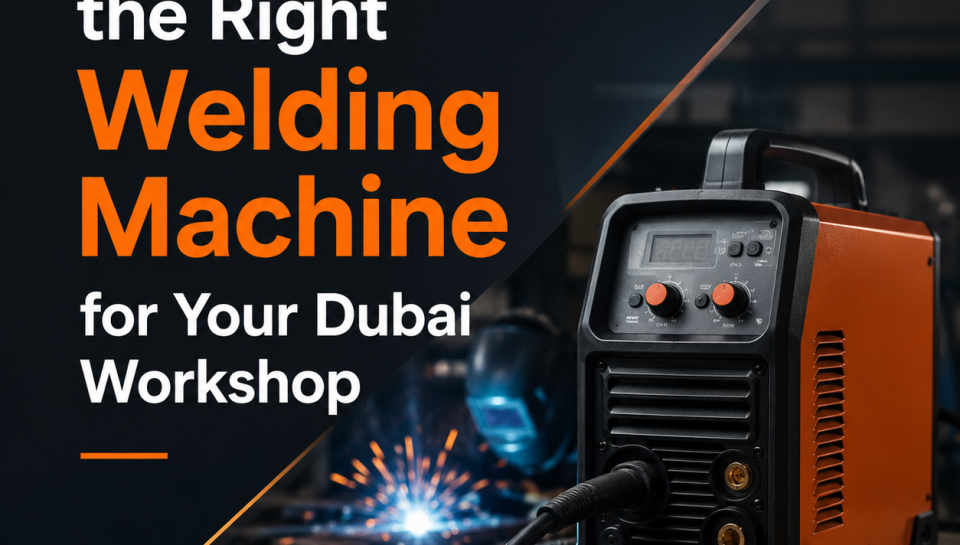
How to Choose the Right Welding Machine in Dubai
Walk into any workshop and ask welders about the biggest equipment mistake they’ve seen, and you’ll hear the same answer again and again: buying the wrong welding machine.
It usually starts with good intentions. The machine looks powerful, the price seems reasonable, and the specifications sound impressive. Then the real work begins, and suddenly the machine struggles with the materials being used, slows down production, or simply isn’t the right fit for the jobs coming through the door.
Choosing the right welding machine Dubai businesses use every day isn’t about buying the biggest model on the shelf. It’s about finding a machine that fits your work, your team, and the projects that keep your workshop busy.
What Should You Look at Before Buying a Welding Machine?
Before comparing brands, features, or prices, take a step back and look at the work happening in your workshop.
A fabrication shop building steel structures all week has very different requirements from a workshop focused on stainless steel fabrication or machinery repairs. The machine that works perfectly for one business may create unnecessary problems for another.
A good starting point is to ask a few simple questions:
- What materials do you weld most often?
- How thick are those materials?
- How many hours a day will the machine be used?
- Do you mainly work inside the workshop or on project sites?
- Are larger projects likely in the future?
The answers will narrow down your options much faster than scrolling through product specifications.
How Does the Material Affect Your Choice?
The metal being welded should always guide your decision.
Mild steel is the most common material in fabrication workshops across Dubai. It works well with several welding methods and is generally straightforward to weld.
Stainless steel requires greater control, especially when appearance matters. A poor weld on stainless steel stands out immediately, which is why many workshops choose equipment that provides cleaner and more precise results.
Aluminum is where things get interesting. It heats up quickly, cools down quickly, and reacts differently from steel. A machine that handles steel perfectly may not give the same results on aluminum. That’s why aluminum fabrication often requires more careful equipment selection.
If your workshop works with multiple materials, make sure the welding machine can handle all of them efficiently rather than excelling at only one.
What Is the Difference Between MIG, TIG, and Stick Welding?
This is one of the most common questions buyers ask, and for good reason.
MIG Welding Machines
MIG welding is often the first choice for fabrication workshops because it combines speed, ease of use, and productivity.
It works well for gates, railings, shelves, steel frames, automotive work, and general metal fabrication. New welders usually learn MIG welding faster than other methods, which is another reason many businesses prefer it.
For workshops where output matters, MIG welding equipment is usually high on the shortlist.
TIG Welding Machines
TIG welding is chosen when precision is a priority.
You’ll often see TIG welding used for stainless steel fabrication, aluminum projects, food-grade equipment, decorative metalwork, and custom fabrication jobs.
The process takes longer than MIG welding, but the finished welds are often cleaner and more refined. If appearance matters to your customers, TIG welding deserves serious consideration.
Stick Welding Machines
Stick welding continues to be widely used across construction sites, maintenance departments, and repair workshops.
It performs well outdoors and can handle conditions that may cause issues for other welding methods. Wind, dust, and uneven working environments are less of a concern with stick welding.
That flexibility is why many businesses keep a stick welder available even when MIG welding handles most production work.
How Much Welding Power Do You Actually Need?
One of the biggest misconceptions is that more power automatically means a better machine.
In reality, the right amount of power depends on the material thickness you’re working with.
A workshop welding thin sheet metal doesn’t need the same output as a company working on heavy structural steel. Too much power can create as many problems as too little power.
The goal is to choose a machine that comfortably handles your daily work while giving you enough room to take on larger projects when opportunities arise.
A little extra capacity is useful. Excessive capacity usually sits unused.
Why Does Duty Cycle Matter So Much?
Duty cycle doesn’t get as much attention as amperage or welding processes, but it has a huge impact on daily productivity.
Think of it as the machine’s stamina.
A welding machine with a higher duty cycle can weld for longer periods before needing to cool down. During a busy production day, that means fewer interruptions and smoother workflow.
For workshops handling regular fabrication work, this can make a noticeable difference by the end of the week.
Should You Choose an Inverter Welding Machine?
In many cases, yes.
Inverter welding machines have become extremely popular because they’re lighter, easier to move, and generally more energy efficient than older transformer-based models.
They also provide a smoother welding arc, which helps improve weld consistency.
For workshops where welding equipment is used daily, lower power consumption can gradually reduce operating costs while improving performance at the same time.
Why Your Power Supply Matters Before You Buy
Imagine finding the perfect welding machine only to discover your workshop can’t properly run it.
It happens more often than many people think.
Some welding machines require single-phase power, while others need three-phase power. Before making any purchase, verify your workshop’s electrical setup.
Checking this early can prevent installation delays, unexpected expenses, and a lot of frustration.
What About Spare Parts and Technical Support?
A welding machine may last for years, but eventually every machine will need maintenance.
This is where supplier support becomes important.
Before buying, find out:
- Are spare parts available locally?
- How quickly can repairs be arranged?
- Is technical support available if needed?
- Are consumables easy to source?
These questions may not seem important on the day of purchase. They become very important when a project deadline is approaching and equipment needs attention.
Key Things to Compare Before Making a Decision
Before choosing a welding machine, compare:
- Materials being welded
- Material thickness
- Welding process required
- Amperage range
- Duty cycle
- Power supply requirements
- Energy efficiency
- Spare parts availability
- Technical support
- Future production needs
Looking at these factors together gives a much clearer picture than comparing price alone.
Conclusion
Choosing a welding machine isn’t about finding the most powerful option or chasing the latest features. It’s about finding equipment that works smoothly with your materials, your projects, and the way your workshop operates every day.
Find a Welding Machine That Fits Your Workshop
A welding machine is an investment you’ll work with for years, so getting it right from the start matters. If you’re comparing options and want advice based on your actual workload, AKA Trades can help.
Our team can recommend the right welding machine Dubai businesses need for fabrication, manufacturing, maintenance, and construction work. Simply tell us what you weld, the materials you use, and the type of projects you handle, and we’ll help you find a solution that makes sense for your workshop and your budget.
Get in touch with AKA Trades today and take the guesswork out of choosing your next welding machine.
FAQs
How long does a welding machine typically last?
A quality welding machine can last anywhere from 8 to 15 years or even longer with proper maintenance. Regular cleaning, correct voltage supply, and timely replacement of consumables can significantly extend its lifespan.
Is an inverter welding machine better than a traditional welding machine?
Inverter welding machines are generally more energy efficient, lighter, and easier to transport. They also provide better arc stability, making them a popular choice for fabrication workshops, maintenance teams, and industrial applications.
Can one welding machine handle both steel and aluminum?
Some welding machines can weld both steel and aluminum, but they may require additional accessories, settings, or welding processes. Always check the machine’s compatibility before purchasing if you work with multiple materials.
What size welding machine is suitable for a small workshop?
The right size depends on the type of work being performed. Small workshops handling gates, railings, repairs, and light fabrication often benefit from medium-capacity welding machines that provide enough power without increasing operating costs unnecessarily.