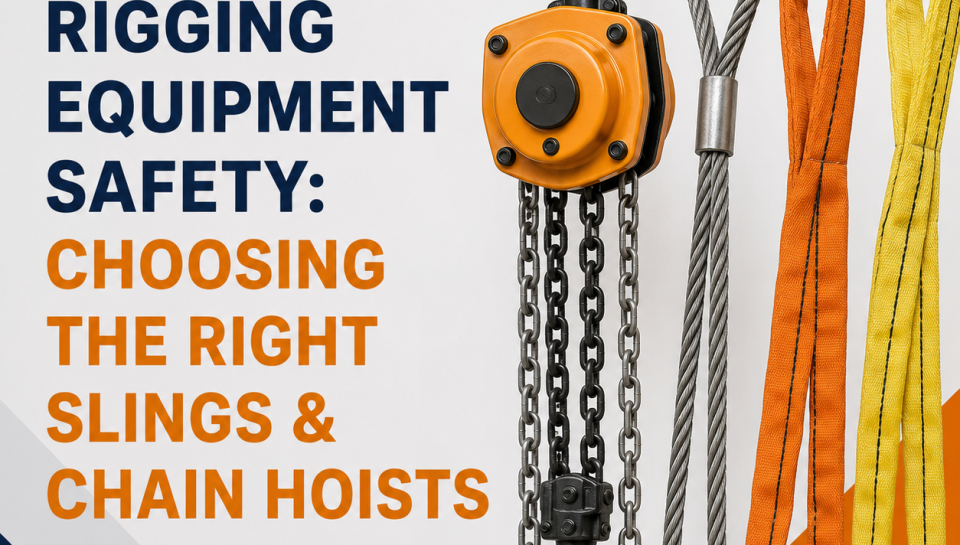
Rigging Equipment Safety: Choosing the Right Slings & Chain Hoists
The right rigging equipment keeps your team and your load safe. It also cuts downtime and equipment damage.
Every lift is different. Load weight, lifting angle, environment, and lifting points all change which equipment you need. A mismatched sling or chain hoist can damage the load, wear out fast, or cause a serious injury.
Rigging equipment is the gear used to lift, secure, and move heavy loads, like slings, hooks, shackles, and hoists. High quality rigging equipment is built for specific weight limits and job conditions. Always match your equipment to the weight and type of load before you lift.
How Do You Choose the Right Lifting Sling?
Choose a sling based on your load’s weight, surface, and environment. A lifting sling is the strap or chain that connects your load to the lifting device. Different materials suit different jobs.
- Wire rope slings handle heavy industrial loads. They resist abrasion well.
- Chain slings work best in tough spots. Think high heat, sharp edges, or rough surfaces.
- Synthetic web slings are lighter. They protect finished or delicate materials from surface damage.
Why the Lifting Angle Matters
A smaller lifting angle increases the load on each sling. This happens even when the total weight of your load does not change.
For example, at a 90-degree angle, each leg of a two-leg sling carries half the load. At a 30-degree angle, that same leg can carry double the load or more. Always check the manufacturer’s load chart before every lift.
How Do You Select the Right Chain Hoist?
Pick a chain hoist based on lifting capacity, height, environment, and how often you will use it. A chain hoist is a device that lifts and lowers heavy loads using a chain mechanism.
- Manual chain hoists work well for smaller jobs or spots without power.
- Electric chain hoists boost productivity for frequent lifting.
Never run a hoist past its rated capacity. This applies even for a quick, short lift.
If you will use the hoist all day, check its lifting speed and duty cycle too. Continuous industrial use needs equipment built for heavier daily workloads.
What Safety Checks Should You Do Before Every Lift?
Inspect your equipment before every single lift. This quick check can prevent most rigging accidents.
Look for:
- Broken wires
- Stretched chains
- Bent hooks
- Damaged safety latches
- Worn fittings
- Corrosion
- Cuts in synthetic slings
- Damaged or missing identification tags
If you spot any of these signs, or if you cannot read the load rating, do not use the equipment.
Many workplaces check the sling but skip the connectors. Shackles, hooks, and master links need regular checks too. A strong sling still fails if one connector breaks.
What Mistakes Reduce Lifting Safety?
Three mistakes cause most preventable lifting accidents: dragging slings on rough surfaces, storing gear outdoors, and skipping inspection schedules.
Dragging slings across concrete or metal edges causes hidden damage. This damage often does not show up in a quick visual check. Edge protection can extend the life of synthetic slings.
Storing equipment outdoors without cover lets moisture, chemicals, and sunlight weaken the materials over time. Clean, dry, indoor storage keeps your gear in working condition longer.
Skipping manufacturer inspection schedules is another common error. Even gear that looks fine may need a detailed inspection at set intervals, based on how often you use it.
Where Can You Buy Reliable Rigging Equipment?
AkaTrade supplies high quality rigging equipment in the UAE. This includes lifting slings, chain hoists, wire rope slings, shackles, hooks, and other lifting accessories from trusted manufacturers.
Whether you work in construction, marine, oil and gas, fabrication, or industrial maintenance, the AkaTrade team can help you choose equipment that matches your lifting needs.
Contact AkaTrade today to find the right lifting solution for your business, and keep every lift safer, faster, and fully supported.