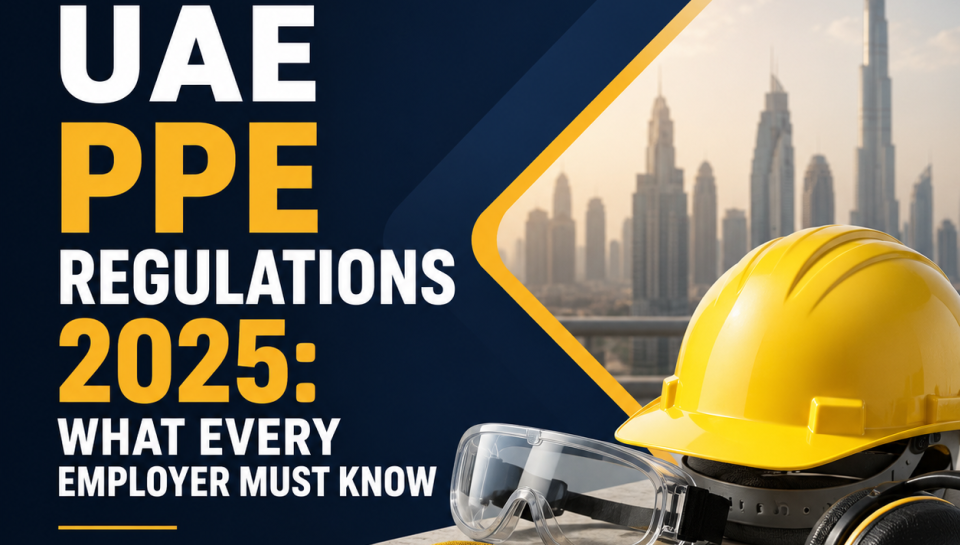
UAE PPE Regulations 2025: What Every Employer Must Know
One missing helmet. One worn-out safety harness. One pair of gloves that does not match the job. Small mistakes like these can lead to serious injuries, costly delays, and legal trouble.
The UAE PPE regulations 2025 are designed to reduce those risks. They require employers to identify workplace hazards, provide the right personal protective equipment (PPE), train employees, and keep safety equipment in good condition. If you want to stay compliant and build a safer workplace, this guide covers everything you need to know.
What Are the UAE PPE Regulations 2025?
The UAE PPE regulations 2025 require employers to provide suitable personal protective equipment whenever workplace hazards cannot be removed through safer work methods or engineering controls.
PPE includes safety helmets, safety shoes, gloves, eye protection, hearing protection, respirators, high visibility clothing, protective coveralls, and fall protection equipment. The type of PPE depends on the work being done and the risks involved.
The regulations also expect employers to train workers, inspect PPE regularly, and replace equipment before it becomes unsafe. Following these steps helps businesses maintain PPE compliance in the UAE while creating a safer place to work.
Why Does Every Job Need a Risk Assessment Before PPE Is Chosen?
The right PPE starts with knowing the risks.
A workplace risk assessment helps identify hazards before work begins. These hazards might include falling objects, chemicals, loud machinery, dust, electrical work, moving vehicles, or working at height. Once those risks are clear, employers can choose PPE that actually protects employees from those specific hazards.
For example:
- Construction workers may need safety helmets, steel toe safety shoes, reflective vests, eye protection, gloves, and fall protection.
- Warehouse employees may need safety shoes, gloves, and high visibility clothing around forklifts and loading areas.
- Employees handling chemicals need gloves, goggles, face shields, or protective clothing designed for the chemicals they work with.
- Electricians may require insulated gloves and arc-rated protective clothing.
Keeping a written risk assessment also helps during workplace inspections because it shows how safety decisions were made.
How Do Employers Choose the Right PPE?
Buying PPE without checking the job first is a common mistake. A helmet, glove, or respirator is only effective if it matches the hazard.
When selecting PPE, employers should check:
- The equipment meets recognised safety standards.
- It fits each employee properly.
- Workers can move and perform their tasks comfortably.
- Different pieces of PPE work well together. Safety glasses should fit properly under a helmet, and hearing protection should not interfere with other equipment.
- Replacement parts are easy to obtain when needed.
Employees working outdoors in the UAE also benefit from lightweight, breathable PPE. Comfortable equipment is far less likely to be removed during long shifts, especially in hot weather.
What PPE Is Commonly Used Across UAE Industries?
Different industries need different protection, but some PPE is widely used across many workplaces.
Common personal protective equipment in the UAE includes:
- Safety helmets
- Safety shoes
- High visibility clothing
- Safety gloves
- Safety goggles
- Face shields
- Hearing protection
- Respirators
- Protective coveralls
- Fall protection harnesses
Each item protects against a different type of hazard. Wearing the wrong PPE can leave workers exposed even if they appear fully equipped.
Why Should PPE Be Inspected Even If It Looks Fine?
A piece of safety equipment can lose its strength long before obvious damage appears.
Safety helmets slowly weaken after years of heat and sunlight. Respirator filters stop working after their recommended service life. Harness stitching can wear down through regular use. Safety shoes gradually lose grip as their soles become smooth.
Replacing PPE before it fails helps prevent injuries that could have been avoided.
Many businesses also keep a replacement schedule instead of waiting for equipment to wear out completely. This keeps safety equipment up to date and makes planning future purchases much easier.
What Small PPE Problems Can Turn Into Big Safety Risks?
Many workplace accidents begin with something that seems harmless.
A loose helmet strap can stop a helmet from staying in place during an impact. Gloves that are too large can reduce grip while using tools. Dirty safety glasses can make it harder to see clearly. Worn boot soles can increase the chance of slipping on smooth floors.
Storage matters too. PPE left inside hot vehicles, exposed to direct sunlight, or placed under heavy objects can wear out faster than expected. Keeping equipment clean and storing it correctly helps it last longer and perform properly when it is needed.
A quick inspection before every shift usually takes only a few minutes, but those few minutes can prevent much bigger problems later.
How Does Employee Training Help PPE Compliance?
Giving workers PPE is only the beginning. They also need to know how to use it properly.
Training should cover:
- When PPE is required.
- How to wear and adjust it correctly.
- How to inspect equipment before use.
- How to clean and store PPE.
- When damaged or expired equipment should be replaced.
Short refresher sessions during the year help employees keep these habits fresh. Simple reminder signs placed near work areas also make it easier for workers to choose the correct PPE before starting a task.
How Can Businesses Choose the Right PPE Supplier in the UAE?
A good PPE supplier in the UAE helps businesses choose products that suit their industry instead of selling the same equipment to everyone.
Look for a supplier that offers certified PPE in the UAE, understands different workplace risks, provides products that meet recognised safety standards, and can supply replacement equipment when required.
Buying PPE based only on price usually creates extra costs later through frequent replacements or equipment that does not match the job. Choosing the right products from the start helps businesses improve workplace safety while keeping long-term costs under control.
Final Thoughts
Following UAE PPE regulations 2025 starts with identifying workplace hazards and choosing PPE that matches the job. Regular inspections, employee training, proper storage, and replacing worn equipment all help reduce accidents and keep workplaces compliant.
If your business is looking for certified PPE in the UAE, AKA Trades supplies safety helmets, gloves, safety shoes, eye protection, respirators, fall protection equipment, high visibility clothing, and other workplace safety products for construction, manufacturing, warehouses, logistics, and industrial facilities. Get in touch with our team today and find the right PPE for your workplace.
Frequently Asked Questions
Does every company in the UAE need PPE?
Any business where employees are exposed to workplace hazards should provide suitable PPE based on the risks identified during a workplace assessment.
How often should PPE be replaced?
PPE should be replaced when it becomes damaged, fails an inspection, no longer fits correctly, or reaches the manufacturer’s recommended service life.
Can one type of glove be used for every job?
No. Different gloves are designed for different hazards. Chemical-resistant gloves, cut-resistant gloves, heat-resistant gloves, and electrical gloves each provide protection for specific tasks.
Who is responsible for PPE compliance?
Employers are responsible for carrying out risk assessments, providing suitable PPE, training employees, maintaining equipment, and replacing damaged items. Employees are responsible for wearing PPE correctly and reporting damaged equipment.