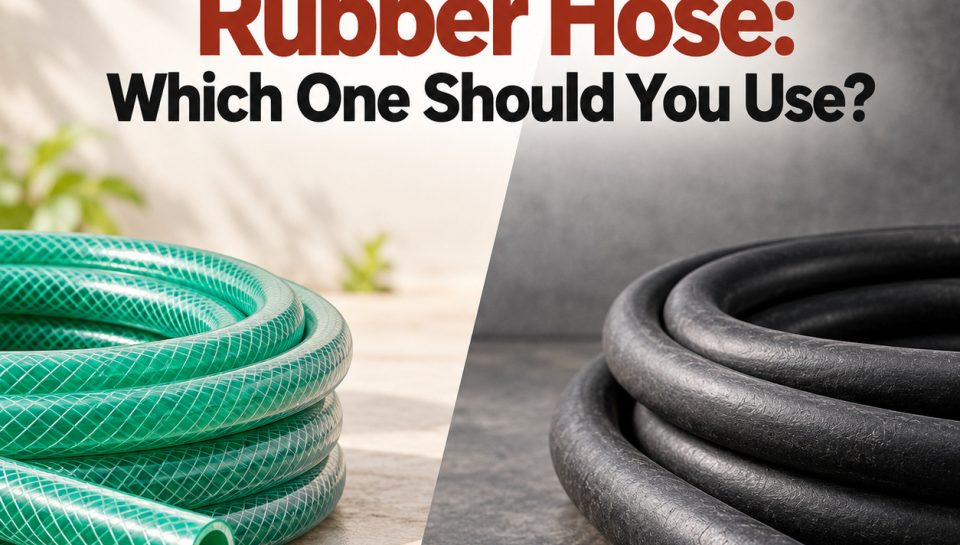
PVC Hose vs Rubber Hose: Which One Should You Use?
Quick Answer:
Use a PVC hose for light jobs with mild temperatures, like water transfer or low-pressure air. Use a rubber hose for heat, cold, rough sites or daily work. If you’re unsure, check the temperature and pressure ratings first.
What is the difference between a PVC hose and a rubber hose?
A PVC hose is made from polyvinyl chloride, a type of plastic, while a rubber hose is made from natural or synthetic rubber.
PVC is lighter and stiffer. Rubber, on the other hand, is heavier but bends easier, and it stays flexible even when the weather turns hot or cold.
How do PVC and rubber hoses compare side by side?
Rubber wins on temperature range, flexibility and wear, while PVC wins on weight and price. Here is the quick view, using typical figures.
| PVC hose | Rubber hose | |
| Temperature | About -10°C to +60°C | About -40°C to +100°C or higher |
| Flexibility | Gets stiff in the cold | Stays flexible |
| Weight | Light | Heavier |
| Wear resistance | Medium | High |
| Lifespan | Shorter in hard use | Longer |
| Cost | Lower | Higher |
Pressure is not on the list for a reason. Pressure rating depends on construction, such as the number of layers and the type of reinforcement. So, read the working pressure on the product label or datasheet before choosing a hose. Exact temperature limits also change from product to product.
When should you use a PVC hose?
Use PVC when the job is light, short or low on budget. It works well for:
- Water transfer
- Washdown work
- Low-pressure air
- General workshop use
- Short-term jobs
However, PVC has its limits. It stiffens in the cold and softens in high heat, which means it also wears faster when used on rough ground.
When should you use a rubber hose?
Use rubber when the hose will see heat, cold, rough handling or daily work. It is commonly used for:
- Compressed air for pneumatic tools
- Gas lines for welding equipment
- Oil and fuel transfer (check the rubber grade first)
- Marine and offshore jobs, including ship store supply
- Rough sites where hoses get dragged and stepped on
Rubber is heavier and costs more up front. However, it usually lasts longer, so you won’t need to replace it as often.
How do you choose between a PVC and a rubber hose?
Answer four questions, and the choice is usually clear:
- What goes through the hose: air, water, oil or chemicals?
- What are the pressure and temperature?
- Where will you use it: indoors, outdoors, on a boat or on a hot site?
- How often will you use it: once in a while or every day?
If the job is occasional, light and low on heat, buy PVC. But if it’s frequent, hot or demanding, buy rubber.
Heat matters even more in the UAE. A hose left in the summer sun gets very hot, and PVC softens when that happens. So, check the maximum temperature on the label before using it.
You should also match your hose couplings and fittings to the hose. After all, even a good hose can leak if it has a worn coupling. Here are 5 signs your hose couplings need replacing.
FAQs
Which is better, a PVC or rubber hose?
Neither is better for every job. PVC is better for light, low-heat work and tight budgets, while rubber is better for heat, cold, rough use and long service life.
Can a PVC hose handle compressed air?
Yes, if it’s rated for air and you stay under its working pressure. However, for heavy daily use with air tools, rubber is usually the safer pick.
Which hose lasts longer in UAE heat?
Rubber usually does. PVC softens at high temperatures, so it wears faster on hot sites. Always check the maximum temperature on the label.
Do I need different couplings for each hose type?
Often, yes. Couplings must fit the hose size and type, so if you’re not sure, send the hose details to a supplier before you order.
Which hose should you pick?
Choose PVC for light, low-heat jobs and rubber for hot, rough or daily work. Not sure which one fits? Send your job details to Akatrade in Deira, Dubai, and request a quote.